

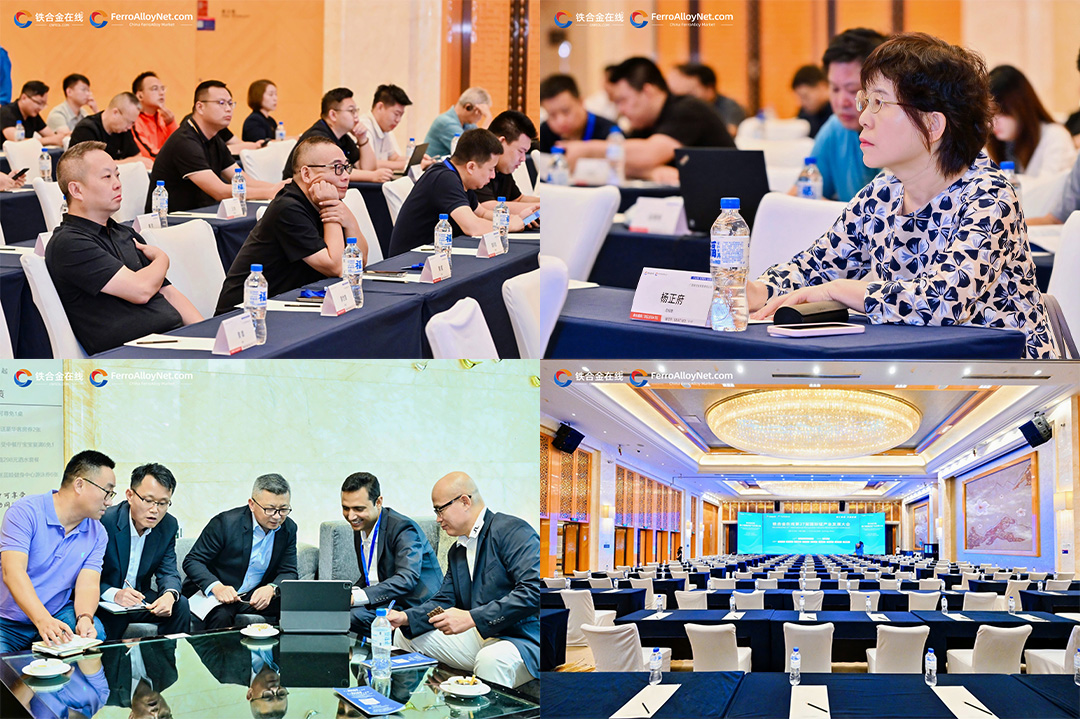
On August 20th, FerroAlloyNet hosted the grand opening keynote address of the 27th International Manganese Industry Development Conference. Industry experts, mining companies, smelters, and traders from around the world gathered to discuss the coordinated development of the upstream and downstream manganese industry chain, sparking a high-level dialogue that exchanged ideas and sparked a surge of wisdom. The forum focused on topics such as steel market analysis and ferroalloy standardization, global manganese market analysis and outlook for 2025, the practice and exploration of DC furnace smelting technology for manganese alloy projects, and the evolving trends in the manganese ore and manganese alloy industry under the anti-involutionary trend by 2025. The event aimed to jointly explore paths for industrial transformation and upgrading, charting a new path for sustainable development for the global manganese industry.
Special thanks to the co-organizer: IMnl
Special thanks to the sponsors: Bosai Minerals Group Co., Ltd., Baise Bisheng Mining Co., Ltd., Baise Bisheng Mining Co., Ltd., Guizhou Bisheng Mining Co., Ltd., GUANGXI HOURONG TRADING CO., ltd., Jiangsu Provincial Foreign Trade Corporation, Ningxia Ronglixin Equipment Manufacturing Co., Ltd., JIANGSU SOHO METALS AND MINERALS CO., LTD., Yuxi Yida Ferroalloy Co., Ltd., Yunnan Mile Metallurgical Building Materials Co., Ltd., and Shandong Xinhai Mining Technology Equipment Co., Ltd. (listed in no particular order)

Before the conference officially began, Mr. Zhong Jingguo, Director of FerroAlloyNet International Business Department, took the stage to deliver a speech. On behalf of the entire FerroAlloyNet staff and the conference organizing committee, Mr. Zhong extended his warmest welcome and heartfelt gratitude to all the distinguished guests and industry colleagues who had traveled from afar to attend. He also expressed his sincere gratitude to all sponsors, supporting organizations, and long-term partners for their unwavering support of this conference and their unwavering trust and commitment to the platform's development. Mr. Zhong stated that in the face of the green, intelligent, and high-end development trends in the manganese industry, FerroAlloyNet will continue to deepen its industry services and strive to build a more professional, authoritative, and commercially valuable vertical information platform and digital trading ecosystem. In the future, the platform will continue to create value through connections and empower the industry with services. We will work hand in hand with enterprises to overcome challenges and share opportunities in a complex and volatile market environment, jointly promoting the high-quality development of the manganese industry chain and writing a new chapter of win-win cooperation.
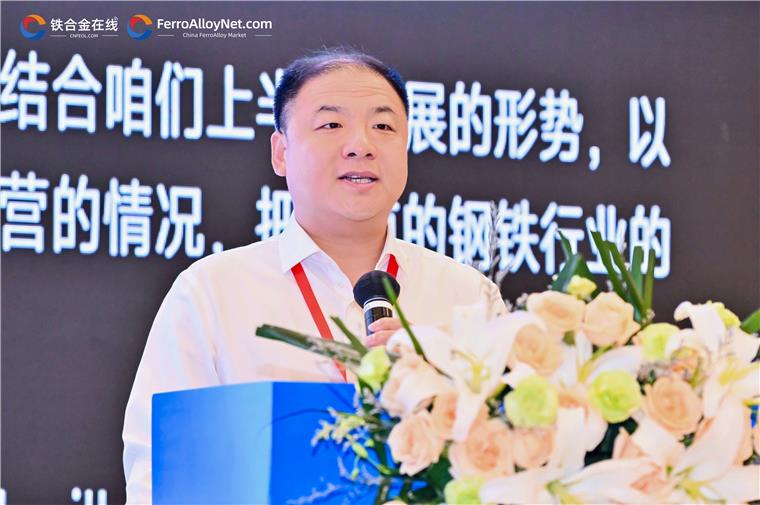
Mr. Lu Chunsheng, Secretary-General of the National Technical Committee for Standardization of Pig Iron and Ferroalloys, Assistant Director of the Metallurgical Standardization Institute of the Metallurgical Industry Information Standards Research Institute was invited to attend the conference and deliver a keynote speech titled Analysis of Steel Market Situation and Ferroalloy Standardization. Mr. Lu began by presenting an overall overview of my country's steel industry. Focusing on its influence, world-class enterprises, industrial chains, products and services, sustainable development, and digitalized production, he explained how, leveraging advanced processes, equipment, procedures, and technologies, my country has built the world's most comprehensive and largest steel industry system. This system occupies a significant position in the global market and supports China's rapid economic and social development. He then analyzed and assessed the steel market's development from the perspectives of steel supply and demand, operations, imports and exports, product mix, and market trends.
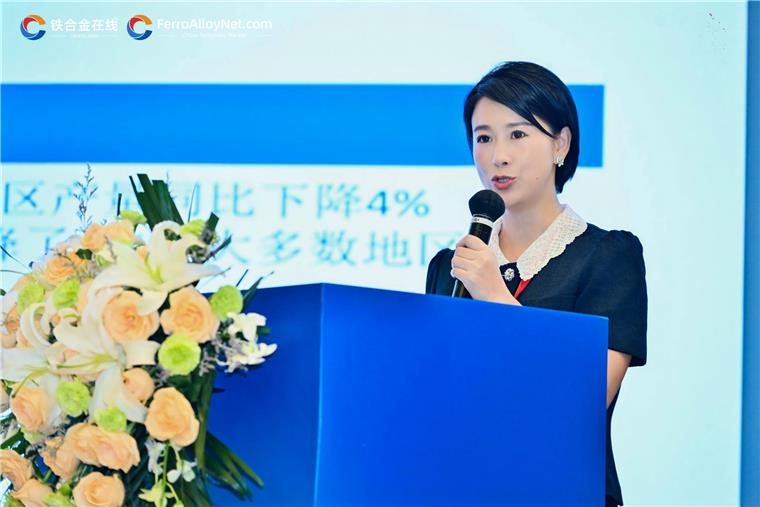
Ms. Eva, IMnI China Representative, presented the Analysis and Outlook of Global Manganese Market in 2025. In the first half of 2025, the global manganese industry exhibited varying trends across various sectors. Global crude steel production declined by 2% year-on-year, while China's June production fell by 4% month-over-month and 9% year-over-year. In the first half of the year, China's steel production fell by 2% year-on-year. The global crude steel production forecast for 2025 has been lowered to 1.85 billion tons (a 7% year-on-year decrease). Manganese content in steel varies by type, with stainless steel containing approximately 2% and rebar accounting for the highest manganese cost (3.6%). Global production of silicomanganese was 8 million tons in the first half of the year, slightly lower than the same period last year. China's production in June increased by 7% month-on-month and decreased by 13% year-on-year. India's production was 1.1 million tons, up 2% year-on-year, and domestic consumption exceeded exports. As of the end of June, global silicomanganese inventories excluding China fell by 14% year-on-year; global production of high-carbon ferromanganese increased by 6% year-on-year in the first half of the year, China's production in June increased by 27% month-on-month, and India's related production also increased. Global inventories excluding China fell by 8% year-on-year; global production of refined ferromanganese increased by 13% year-on-year in the first half of the year, China's production in June increased by 12% month-on-month, and India's related production decreased. Global inventories excluding China increased by 6% year-on-year.
Global manganese ore production increased by 4% year-on-year in the first half of the year. South Africa's manganese ore performed particularly well, with total production (wet weight) increasing by 10% year-on-year, driven by strong exports. Manganese ore exports in 2024 have already increased by 12% compared to 2023, reaching a record high in supply. Trucking to ports remains feasible despite rising costs, but projected price declines later in 2025 may cause some miners to cease trucking. India's manganese ore consumption increased by 16%, while production decreased by 6%, leading to a surge in imports. In 2024, consumption increased by 9%, production increased by 7%, and imports increased by 9%. Imports in May fell by 55% month-on-month (down 62% year-on-year), but imports still grew significantly in the first five months, primarily from South Africa and Gabon.
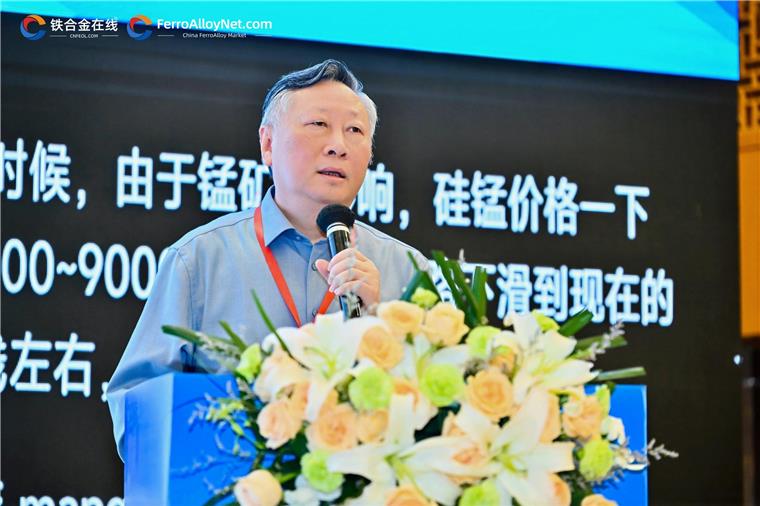
Mr. Han Tao, Director of the Ferroalloy Branch of Sichuan Metallurgical Design and Research Institute, Senior Engineer of Metallurgical Engineering, and Deputy Leader of the Expert Group of Sichuan Ferroalloy (Industrial Silicon) Association, presented a presentation titled Practice and exploration of DC furnace smelting technology for manganese alloy project. DC furnaces have a rich history, from South Africa's first DC furnace for ferrochrome production in 1983, to the landmark Jinyuan project in Guizhou, China in 2018, and finally to the boom in high-power DC submerged arc furnace construction in 2025. These furnaces primarily include bottom-electrode DC furnaces (which suffer from limitations such as bottom electrodes and arc deflection) and multi-circuit DC furnaces (the mainstream type, offering advantages such as high power factor, high powder utilization, and transformer failure without impacting overall production, but also with current and arc deflection). Currently, domestic DC furnaces encounter the following challenges during production: electrode breakage, difficulty in core charging, anode effect, rectifier system burnout, and the mismatch between smelting process parameters and power supply. DC submerged arc furnaces offer significant advantages over AC submerged arc furnaces in alloy smelting, increasing yield and alloying element recovery. They can reduce smelting power consumption by approximately 20% and increase yield by approximately 15%. In this project, DC furnaces have demonstrated significant advantages over AC furnaces, such as reducing power consumption for smelting 6517 manganese silicon from 3800 kWh/t to 3400 kWh/t and increasing recovery rates by 3% to 5%. These advantages are accompanied by clear production and power consumption targets. In the future, DC furnaces will expand into areas such as resolving the problem of fine manganese ore, achieving larger furnace sizes, photovoltaic power supply, automation and intelligentization, and achieving environmentally friendly and efficient performance.
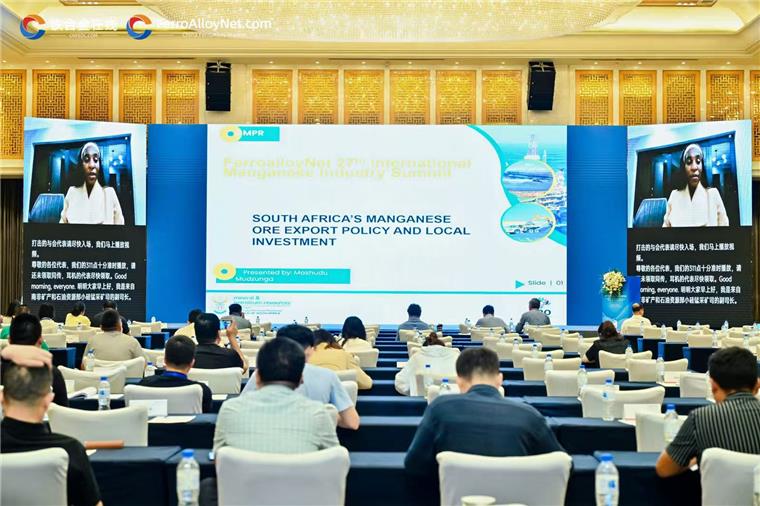
Ms. Mashudu Mudzunga, South Africa's manganese ore export policy decoding and opportunity insights (Video), delivered a video presentation titled Mashudu Mudzunga, Deputy Director of Small Scale Mining from Department of Minerals and Petroleum Resources. Mashudu explained that manganese ore is one of South Africa's key minerals, playing a crucial role in the country's export economy and a major source of foreign exchange earnings. South Africa will continue to strengthen its position as a global supplier by investing in value-added production, beneficiation, and supply chain optimization to maximize export opportunities, while promoting the strategic allocation of manganese resources to ensure a balance between domestic processing and export revenue generation. The proposed export tax stems from the divergent performance of South Africa's two sectors—the upstream chrome mining sector and the downstream ferrochrome sector. These policies do not apply to manganese ore producers and raw manganese ore exporters. The government considers raw manganese exports essential, reserving critical raw materials for local beneficiation and allowing targeted exports to meet current market demand. The government aims to boost investor confidence by conducting a critical minerals investment roadshow with global partners on South Africa's value proposition.
South Africa is also encouraging strong public-private partnerships to develop processing plants, refineries, and natural gas manufacturing facilities with skills transfer. Global market demand provides South Africa with strategic advantages and opportunities for key minerals, such as manganese ore, to integrate more deeply into global value chains, attract foreign investment, and contribute to the global energy transition. Over the past decade, South Africa's ferroalloy industry has been severely impacted by several challenges. Specifically, rising electricity costs, poor railway and port performance, and increased competition from China have all put pressure on South Africa's ferroalloys. In summary, South Africa is currently aiming to address regulatory bottlenecks, review and streamline regulatory requirements across various licensing departments, align regulatory processes across departments, shorten the turnaround time for prospecting rights approvals, and establish a one-stop licensing system.

Ms. Wang Xintong, Alloy Researcher at Dongzheng Futures Derivatives Research Institute, presented the Analysis and case sharing of manganese silicon situation in the fourth quarter. The fourth quarter of the Silicate Manganese futures market was influenced by a complex interplay of factors. Silicate Manganese prices initially rose, then fell, in the first half of the year. At the beginning of the year, declining manganese ore inventories, concentrated port oxide ore rights, and reduced shipments from Gabon all contributed to an upward trend in manganese ore prices, which subsequently followed suit. Later, with the arrival of overseas manganese ore and the emergence of supply pressure, Silicate Manganese prices came under pressure and fell. In the second quarter, low manganese ore inventories and tight supply drove a temporary rebound. Subsequently, falling coking coal prices and the resumption of South32 shipments led to a shift in market expectations towards easing, and Silicate Manganese prices rebounded. In the third quarter, the market deviated from fundamentals, with rising coking coal prices driving gains in ferrous metals, suggesting a bearish outlook on raw material prices.
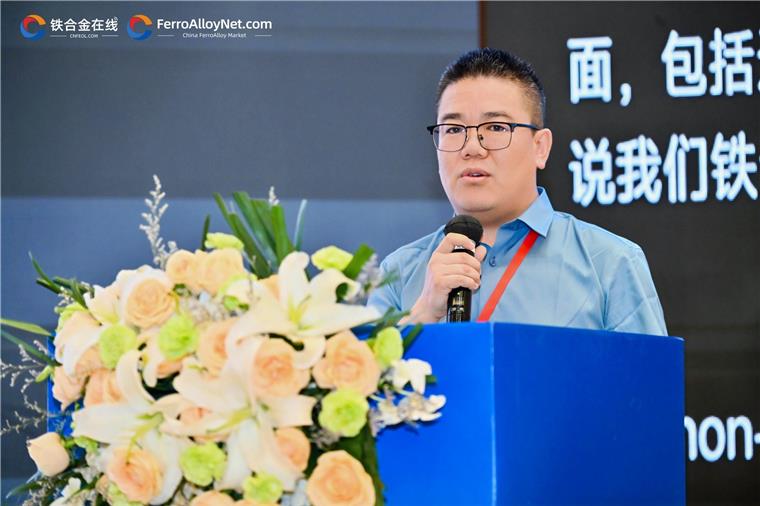
Mr. Song Feiyong, Deputy Director of Technology R&D Center of Nashun Group, presented a presentation titled The role and development prospects of DC furnace in the production pattern of silicon manganese in Inner Mongolia. China's ferroalloy equipment is trending towards larger-scale production (with electric furnaces below 30,000 kVA gradually phased out), enclosed smelting (to improve the environment and recycle CO), automation (including intelligent smelting systems and robotic operation), and green and low-carbon development. Against this backdrop, DC furnaces have gained a significant foothold in Inner Mongolia's silicon manganese production. These furnaces, available in single-electrode + bottom electrode, four-electrode, and six-electrode configurations, offer significant advantages over AC furnaces: a power factor exceeding 0.92, a theoretical reduction in electricity consumption per ton of iron by 10-12%, and approximately 3-6 kg less iron consumption per ton. They also offer more stable operation and ease of operation, with convenient start-up and shutdown facilitating peak load regulation and green power utilization. They also boast higher arc efficiency and lower noise levels, eliminating the need for low-voltage compensation. Currently, projects such as Fengzhen Huaxing and Chayou Qianqi Xinchuang have commenced production, while projects such as Chayou Zhongqi Qinyuan are under construction. In the future, DC furnaces will develop in the direction of smelting technology breakthroughs, intelligent smelting (integrating big data, AI and other technologies), green and low-carbon, and intelligent operation and maintenance of equipment, further promoting the upgrading of Inner Mongolia's silicon manganese industry.

Ms. Evolution of manganese ore and manganese alloy industry trends under the anti-involution wave in 2025, presented a presentation titled Evolution of manganese ore and manganese alloy industry trends under the anti-involution wave in 2025. Under the anti-involutionary wave in 2025, the manganese industry will exhibit multi-dimensional development trends. Economically, the month-on-month decline in the Producer Price Index (PPI) narrowed in July, while the Consumer Price Index (CPI) remained flat. Profits of industrial enterprises above a designated size fell by 1.8% from January to June, with declines in real estate investment and commercial housing sales, putting pressure on the overall economy. The anti-involutionary movement stems from overcapacity, which has led to 32 consecutive months of negative PPI growth and fostered unhealthy competition. Policy-wise, from the 2024 Central Economic Work Conference's emphasis on addressing involutionary factors to the 2025 new Anti-Unfair Competition Law prohibiting sales below cost, multiple departments have implemented intensive measures, driving up ferrous metal futures prices. The manganese alloy industry has also coordinated responses through meetings across multiple regions. Within the industrial chain, steel profits increased from January to June, with crude steel production declining but exports increasing. Manganese alloys experienced price fluctuations, rising open interest, and a slight increase in production, while high-manganese profits remained relatively stable. Regional differences exist in coke, freight, and electricity prices. Manganese ore imports remain stable, while port inventories are low. Major producing countries such as South Africa and Gabon may introduce export restrictions. The industry will transition toward high-quality development, requiring companies to coordinate production, upgrade technology, and secure raw material supplies. While policies may boost prices in the short term, long-term supply and demand balance will be crucial.

Mr. An Teng, FerroAlloyNet Electrolytic Manganese Product Analyst, presented a report titled Development situation of electrolytic manganese industry under the background of external demand. In the first half of 2025, the electrolytic manganese industry was impacted by external demand, alliance policies, and the interconnectedness of the manganese industry chain. Spot prices deviated from traditional supply and demand, and the low-manganese market came under pressure and declined after completing external demand orders. Exports from January to June totaled 145,631 tons, a year-on-year decrease of 24.85%. Exports primarily went to the Netherlands and South Korea. Traditional European demand was weak, and adjustments to EU steel import quotas triggered supply chain restructuring. External procurement volume reached 315,000 tons, accounting for 23.09% of the annual estimated production. While this alleviated downward pressure on the industry, weak domestic and international demand, coupled with sluggish end-user demand, left traders facing an inverted cost-to-profit ratio. Within the industry's transaction system, public warehouses acted as a reservoir, leading to concentrated inventory and a pronounced price anchor. This hindered traders' procurement channels and reduced market share. Going forward, the industry will promote industrial restructuring, pollution control, and clean production initiatives to enhance green and low-carbon development.