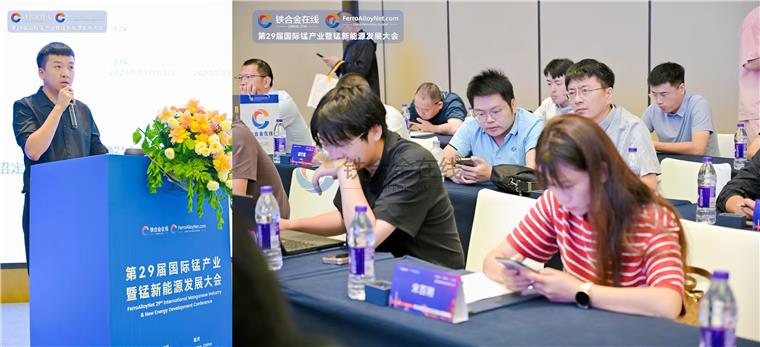
www.ferroalloynet.com: On September 16th, the FerroAlloyNet 29th International Manganese Industry & New Energy Development Conference opened in Chongqing. Experts, scholars, business leaders, and industry representatives from the global manganese industry chain gathered in the city to focus on cutting-edge topics such as breakthroughs in manganese-based new material technologies, the application prospects of manganese-based new energy batteries, global manganese resource strategic layout, green and low-carbon smelting pathways, and the construction of a resilient industrial and supply chain. On the stage, viewpoints clashed and insights were exchanged. In the audience, participants listened attentively and a consensus gradually formed. From resource security to material innovation, from international changes to regional collaboration, participants, with a global perspective and a pragmatic spirit, jointly explored ways to break through the barriers to the integrated development of the manganese industry and new energy, painting a new picture of high-quality development.
Organizer: FerroAlloyNet
Special Supporter: Global Manganese Association (GMA)
Strong Supporter: Bosai Minerals Group Co., Ltd.
Sponsors: Bosai Minerals Group Co., Ltd., A2MP INVESTMENTS DMCC (Co-owners of NGM), Inner Mongolia Vision Green New Materials Co., Ltd., GUANGXI HOURONG TRADING CO., Inner Mongolia Tengfei New Materials Technology Co., Ltd., Anhui Tianshun Environmental Protection Equipment Co., Ltd.

Mr. Chen Xiaofeng, General Manager of FerroAlloyNet, delivered a speech, expressing his heartfelt welcome and sincere gratitude to all the leaders, experts, scholars, and representatives from upstream and downstream enterprises in the industry chain who took time out of their busy schedules to attend. He also expressed his special thanks to the partners who have long supported the conference. In his speech, he reviewed the resilience and vitality shown by the manganese industry amidst global economic fluctuations. He pointed out that as a key strategic resource supporting the development of new energy and new materials industries, the value of manganese is being redefined—from traditional steel metallurgy to power battery cathode materials, from manganese-based alloys to energy storage technology, the application boundaries of manganese are constantly expanding, and the industry is ushering in an unprecedented window of opportunity for development. At the same time, challenges such as resource security, technological bottlenecks, and environmental constraints remain severe, requiring collaborative responses from the entire industry chain. Mr. Chen emphasized that FerroAlloyNet will continue to leverage its platform advantages, continuously deepen its expertise in multiple dimensions, and help enterprises accurately grasp market trends and efficiently connect with advantageous resources. He called on industry colleagues to embrace change with a more open attitude, deepen cooperation with more pragmatic actions, and jointly promote the steady progress of the manganese industry towards high-end, green, and intelligent directions, working together to create a new pattern of high-quality development for the industry.
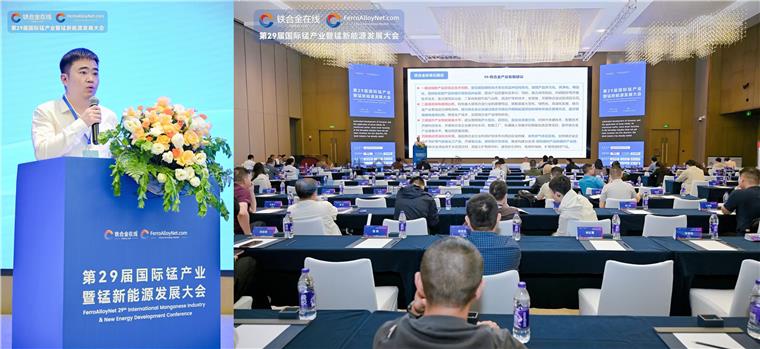
Yu Jiang, Deputy General Manager of Bosai Mining Group Co., Ltd., delivered a speech. As a leading enterprise with significant influence in China's manganese industry, Mr. Yu shared Bosai Mining's explorations and insights in manganese resource development, green and intelligent smelting, and full-industry chain collaboration, drawing on his extensive experience as a frontline enterprise. He pointed out that the manganese industry is at a critical juncture of transformation and upgrading. The booming new energy industry has opened up unprecedented application opportunities for manganese-based materials, while increasingly tight resource constraints, stricter environmental requirements, and intensified market competition are forcing the entire industry to accelerate its transformation. He emphasized that the future of the industry lies not in short-term scale expansion, but in long-term quality and efficiency improvement; no longer in individual efforts, but in collaborative progress across the entire industry chain. Only by ensuring solid resource security, upgrading technology effectively, and implementing green development can enterprises stand firm amidst changes, and can the industry achieve steady and long-term development. Mr. Yu's sharing not only demonstrated the profound insights of a frontline enterprise but also conveyed a firm confidence in the long-term development of the industry, winning rounds of applause from the audience.
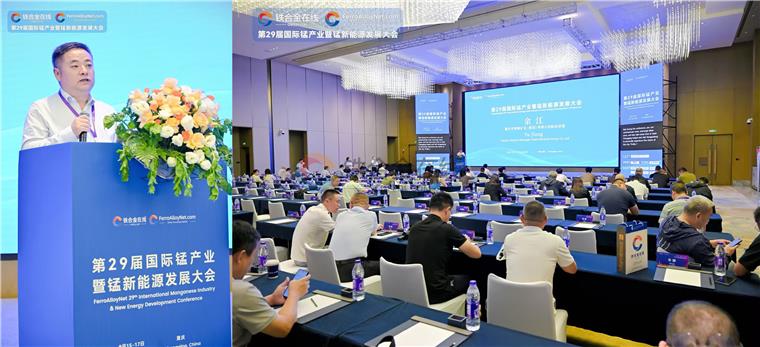
Mr. Lu Chunsheng, Assistant Director of the Standardization Research Institute, delivered a report entitled Analysis of the Reviewing the Present, Forecasting the Future: An Analysis of China’s Complete Steel Industry Chain (2027) at the conference. The report reviewed the achievements of the steel industry's high-end, intelligent, and green development during the 14th Five-Year Plan period, highlighting accelerated equipment and process iteration, globally leading R&D investment, a reduction in the proportion of steel used in construction to below 50%, and an ultra-low emission transformation rate exceeding 85%. Several intelligent manufacturing and low-carbon achievements have gained international recognition. The report also assessed that, as the first year of the 15th Five-Year Plan, the steel industry faces overcapacity and continued demand contraction, with crude steel production expected to fall to 880-900 million tons. The industry as a whole is "surviving in the first half and seeking development in the second half." Steel use in real estate and infrastructure is declining, while demand for special steel in manufacturing is increasing due to new energy, shipbuilding, and automobiles. Steel exports remain high at hundreds of millions of tons, and the industry has long been in a state of low profitability. On the policy front, the dual control of capacity and output will continue, with ultra-low emissions, energy consumption, and carbon emissions becoming hard constraints. Enterprises should abandon scale-oriented approaches and pursue comprehensive competitiveness in cost, products, and services. They can learn from overseas layout models to expand their development space while guarding against overseas investment risks. The ferroalloy industry has concentrated production capacity, with ferromanganese and electrolytic manganese accounting for one-third of total output. Ferromanganese production has slightly declined due to adjustments in downstream steel grades. The industry faces problems such as overcapacity, inconsistent equipment levels, and difficulties in regulation. During the 14th Five-Year Plan period, 140 national standards were released in the ferroalloy sector, and the industry led several international standards. During the 15th Five-Year Plan period, the development of standards related to manganese-based new energy raw materials will be accelerated.
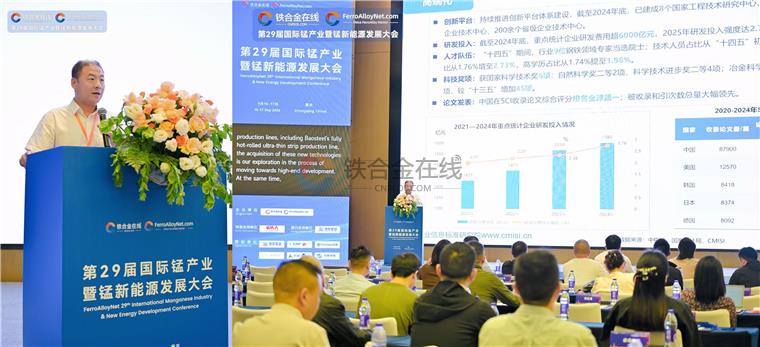
Mr. Ma Liang, Research Director of Commodity Research Institute of Envision Group, delivered a speech entitled "Source-Grid-Load-Storage" Builds a Green Foundation: Decoding Inner Mongolia's New Landscape of Green Power-Empowered Alloy Industries. His presentation focused on Inner Mongolia's development of the alloy industry through source-grid-load-storage technology, highlighting the fragmented production capacity of the ferrosilicon and silicon manganese industries. He pointed out that electricity is the cost item with the most room for independent optimization in alloy production, and the traditional separation of procurement and sales makes profit management difficult for enterprises. With the advancement of domestic power market reforms and the continuous increase in the proportion of new energy sources, new problems such as curtailment and negative electricity prices have emerged. Ferroalloy enterprises, new energy providers, the power grid, and the government have different demands, compounded by China's dual-carbon targets and the upcoming implementation of the EU's CBAM carbon tariff. The resulting export pressures make green transformation of the alloy industry imperative. Envision Energy, leveraging Inner Mongolia's abundant wind and solar resources and its locational and policy advantages, has launched the world's first Power to X alloy verification project. Relying on integrated source-grid-load-storage control technology, the project is constructing a large-scale new energy base with supporting green alloy production lines, participating in the drafting of relevant standards for zero-carbon industrial parks, promoting the high-proportion consumption of green electricity, achieving reduced production costs, improved gross profit margins, and significantly reduced carbon emissions. The project also includes the development of tail gas to methanol technology and the expansion of green alloys, green hydrogen, and other products, helping to reduce carbon emissions in the steel industry chain and creating a green electricity and low-carbon metallurgical ecosystem, providing a practical paradigm for local industrial upgrading and global industrial decarbonization.
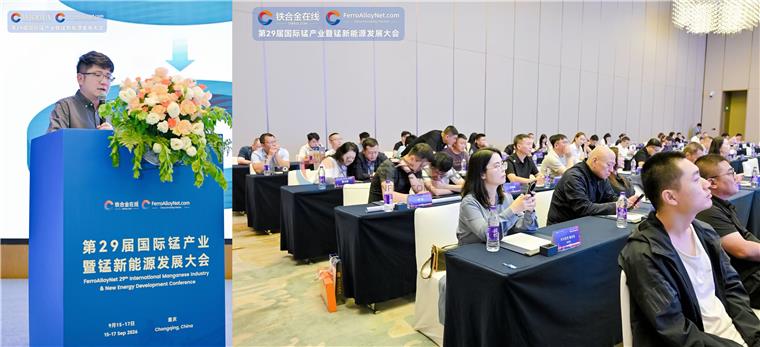
Mr. Wang Hong, Executive Deputy Secretary-General of Global Manganese Association (GMA), shared insights into the current state of the manganese industry. The overall market situation is severe. Factors such as declining crude steel and rebar production, and a joint initiative by 45 leading steel companies to control production, have led to continued weakening demand for ferrosilicon manganese. Looking back at recent market trends, ferrosilicon manganese prices have largely been driven by external factors such as energy consumption policies, overseas unforeseen events, and crude oil price fluctuations, highlighting the industry's reliance on market conditions. Currently, the industry's operating rate is at a low level in recent years, with Inner Mongolia at approximately 60% and Ningxia at only 41%. Steel mills' monthly ferrosilicon manganese consumption remains at 680,000-700,000 tons. If steel production continues to decline, ferrosilicon manganese demand will further contract. On the supply side, domestic manganese ore imports this year are expected to approach 36 million tons, and port inventories have rebounded to 6 million tons, increasing inventory pressure. Increased demand in the Indian market is diverting demand from major manganese ore sources such as South Africa, Australia, and Gabon, providing a temporary buffer for the domestic market. However, the current cost of manganese ore delivery is generally inverted, with traders and factories holding large quantities of ore, which supports ore prices but also accumulates significant risks. In terms of cost, manganese ore accounts for 50% of the production cost of ferrosilicon manganese, and most producers are operating at a loss. Although demand for manganese in the new energy sector is increasing, the increase is only in the hundreds of thousands of tons, which is insufficient to absorb the large inventory. The dilemma of "high ore prices and low alloy prices" should be guarded against. In response to the industry's predicament, Mr. Wang offered several suggestions for breaking the deadlock: enterprises should strictly control production and operating costs and prepare for a long-term bottoming-out period for the industry; continue to promote the implementation of the policy of exempting ferrosilicon manganese alloy exports from tariffs; closely follow the downstream steel product structure adjustment and develop diversified production; combine with the national policy guidance to rectify disorderly low-price competition and promote industry self-discipline in reducing production; and make full use of hedging tools to hedge against the risk of sharp price fluctuations. In addition, the Global Manganese Association's official website has been launched, offering weekly reports including manganese ore shipments, inventory at each stage, and logistics costs, providing data support for the operational decisions of mining, production, and trading companies.
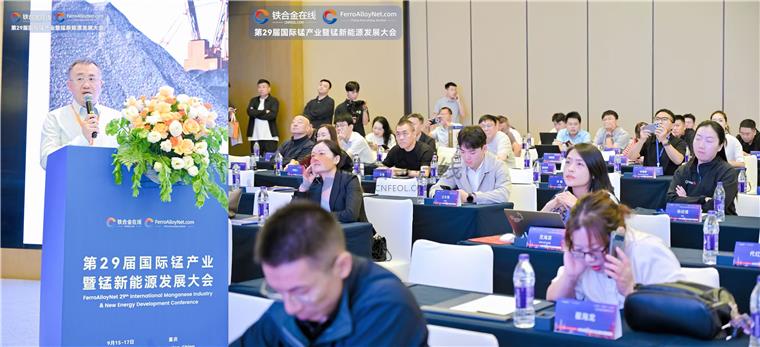
Mr. Bai Kai, Senior Manganese Alloy Analyst of CRU Group, spoke on the topic of Current Market and Future Outlook for Global Manganese-Based Ferroalloys in the New Landscape. Domestic steel demand continues to weaken, and domestic manganese alloy smelting companies are forced to reduce production due to cost squeezes, but inventory Deposits remain high, and the northern region relies on new energy resources, silicomanganese production capacity continues to expand, and the industry is in urgent need of supply-side reform; overseas steel production is picking up, India's manganese alloy output and exports have increased significantly, and it continues to seize market share in Europe and the United States with its cost advantage. The EU has implemented ferroalloy import safeguards combined with minimum price and quota systems. The extension of the CBAM free quota withdrawal period has provided support to regional alloy prices. The U.S. market is also dominated by low-cost sources from India and Malaysia. The market is also facing multiple variables. A super strong El Niño may interfere with global shipping, mining production and construction demand. Gabon’s raw ore export ban is likely to be restricted by electricity. Delayed implementation, geopolitical conflicts, adjustments to various countries' trade policies, and the intensity of China's stimulus policies pose risks to the market. Overall, the increase in overseas steel offsets the decrease in domestic steel production. However, China's new alloy production capacity still brings pressure from global oversupply. Most market participants maintain optimistic expectations for future manganese alloy prices and trading volumes.
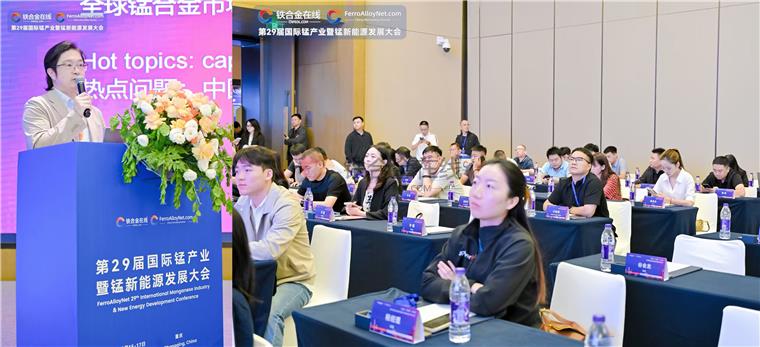
Yang Ping, Representatives from the Qingchuan County Investment Promotion Center, delivered a special investment presentation. Qingchuan is located at the junction of Sichuan, Shaanxi, and Gansu provinces, and is a core manganese-rich area in Sichuan, with proven reserves exceeding 18 million tons and prospective reserves exceeding 60 million tons. Currently, Qingchuan has established a complete industrial chain from manganese mining to new energy battery materials, boasting the largest production capacity of battery-grade manganese tetroxide in the province. It possesses complete supporting land, energy, and financial resources, and its preferential policies for enterprises are robust and effective. Qingchuan is striving to build a 10 billion yuan-level manganese-based new materials industrial cluster and is actively attracting projects in green manganese mining, manganese-based new energy cathode materials, and comprehensive utilization of manganese slag. We sincerely invite everyone to visit Qingchuan for inspection and exchange. Important information: The exploration rights for the Maowanli manganese mine in Qingchuan have been listed for auction. The exploration rights cover an area of 1 square kilometer and have discovered manganese resources of 6.067 million tons, ranking first in Sichuan Province for single-body manganese resources in the past decade. We welcome entrepreneurs to register and bid.
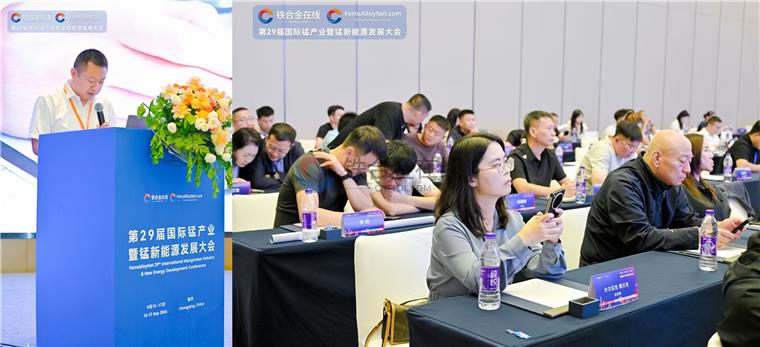
Mr. Wang Zhengwei, Chief Technology Officer of Phylion Battery Co., Ltd., delivered a speech entitled Cutting-edge Design and Application Exploration of Novel Manganese-based Materials. He explained that the small power battery market is characterized by cost sensitivity, differentiated cycle life scenarios, and comprehensive performance requirements. With the implementation of new national standards for electric bicycles and electric motorcycles and the widespread adoption of large-cell batteries, traditional manganese-based batteries, while possessing advantages in low cost, low temperature, and volumetric energy density, are constrained by manganese leaching and the Jan Taylor effect, exhibiting shortcomings in high-temperature cycling and storage, making them unable to meet new industry standards. Xingheng's subsidiary, Xingheng Qingyuan, leveraging its manganese-based precursor development platform, has innovated high-temperature solid-phase technology and launched industry-leading solutions. The mass-produced single-crystal manganese trioxide precursor, through in-situ magnesium doping and rare earth high-entropy doping, effectively reduces manganese leaching, significantly improves the cycle life, high-temperature storage, and safety performance of lithium manganese oxide, and controls production costs. It also pioneered a patented route for synthesizing lithium manganese iron phosphate from manganese iron oxide (MFO) precursors, achieving uniform distribution of manganese iron elements in the crystal lattice, significantly improving the conductivity and cycle life of lithium manganese iron phosphate. The company has the capability for mass production of multiple types of manganese-based precursors and a production capacity of tens of thousands of tons. It owns a number of domestic and international patents, and its products can be applied to the lithium battery and sodium battery fields, providing the small power market with a comprehensive manganese-based material solution that takes into account safety, lifespan, energy, and cost.
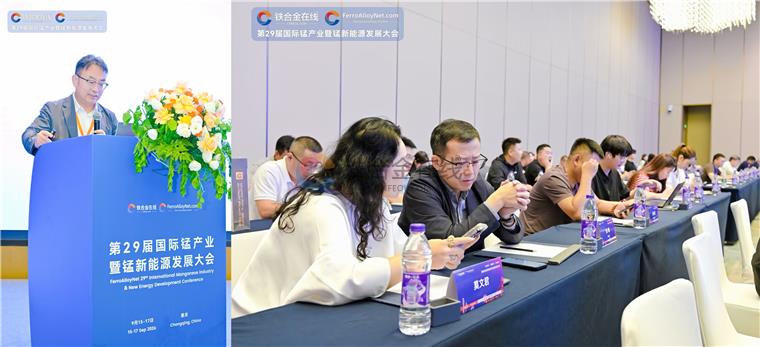
Ms. Gan Xuemei, Gan Xuemei, Manganese Senior Analyst of FerroAlloyNet, presented on Introduction to the Manganese Ore Pricing Mechanism and Its Application by FerroAlloyNet. She explained that manganese ore is the core raw material at the source of the manganese industry chain, accounting for 45-55% of the production cost of ferrosilicon and ferromanganese, directly influencing the operating profits and losses of alloy companies. In July 2026, domestic imported manganese ore consumption increased by 10.16% year-on-year. FerroAlloyNet adheres to the principles of objectivity, neutrality, and impartiality in building its manganese ore price collection system. Its analyst team undergoes standardized professional and ethical training, and the data collection targets cover all stakeholders in the industry chain, including mines, traders, and smelters, combined with regular FerroAlloyNet data collection. Through communication and on-site research, the platform collects two types of information: market quotations and actual transactions. A differentiated weighting model is established, and after initial sampling, multi-dimensional cross-verification, and elimination of abnormal prices, daily market data, reports, and historical data on domestic ore, imported ore, and international markets are released regularly. These price results can be used for spot price negotiations, long-term contract settlements, internal benchmarking by enterprises, and industry research by institutions. The platform establishes a dynamic evaluation and elimination mechanism for data collection targets and an open feedback channel for error correction. It also clearly defines relevant disclaimers, stating that the data is for industry reference only and does not constitute a transaction offer. The aim is to provide the manganese industry with a fair and reliable price indicator to assist market operation decisions.
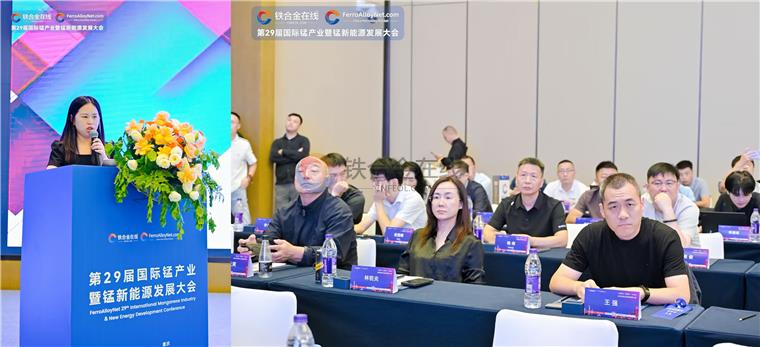
Mr. An Teng, An Teng, Manganese Senior Analyst of FerroAlloyNet, presented a comprehensive review of the electrolytic manganese market from 2023 to the first half of 2026, titled The Electrolytic Manganese Industry Landscape and Future Development Amidst Supply-Demand Restructuring. The review covered the market conditions in 2023, noting that the industry alliance's production restrictions and stockpiling policies had limited impact, leading to an overall market decline. In 2024, costs and policies helped establish a bottom, but multiple attempts to rise were hampered by weak demand. In the fourth quarter of 2025, prices surged, driven by foreign trade orders. In the first half of 2026, prices fell from their highs, relying on production controls and cost support to achieve bottoming-out fluctuations. On the supply side, industry concentration continued to increase, with Tianyuan Manganese and Southern Manganese maintaining their leading positions. Total output initially decreased and then increased due to environmental regulations, policy controls, and market profitability. Affected by multiple rounds of policy adjustments to the US Section 232 steel and aluminum tariffs, European special steel exports fluctuated, putting overall pressure on China's electrolytic manganese exports to Europe. Looking ahead, rising sulfur prices will push up sulfuric acid costs, further exacerbating the capacity gap between large and small enterprises. Meanwhile, demand from traditional downstream sectors such as real estate and stainless steel is recovering weakly, leading steel mills to shift towards purchasing only what they need. Coupled with the promotion and application of alternative materials in smelting, the incremental growth from new energy sources is insufficient to offset the traditional demand gap. The industry will continue to face a struggle between cost support and weak demand, and its upward momentum will be limited in the medium to long term.