

www.ferroalloynet.com: On March 19th, the highly anticipated FerroAlloyNet 28th International Manganese Industry Development Conference entered its core agenda phase. The full-day thematic forum was held in Ulanqab. Experts, scholars, business leaders, and industry elites from the global manganese industry chain gathered to conduct in-depth discussions on core topics such as market trends, supply and demand dynamics, green transformation, and future opportunities, providing guidance for the high-quality development of the global manganese industry.
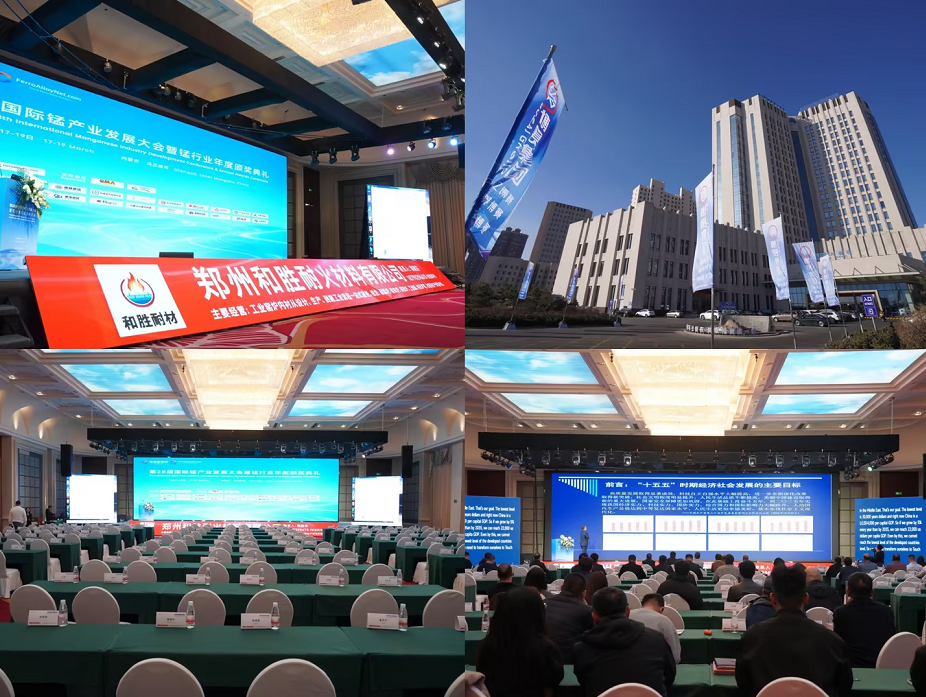
Special thanks to the supporting organizations:GMA, Ulanqab Ferroalloy Industry Alliance
Special thanks to the sponsors: Hesheng Refractory Materials Co., Ltd., Shanghai Manganese Union Technology Co., Ltd., Jiangsu SOHO Metal Co., Ltd., Bosai Minerals Group Co., Ltd., Huade County Tiancheng Ferroalloy Co., Ltd., GUANGXI HOURONG TRADING CO., Yixing Yuyou Metallurgical Equipment Co., Ltd., Tianjin Miracle International Trading Co., Ltd., Tianjin Sigma Innova Technology Co.,Ltd.,Tianjin Zhongzhi International Trade Co., Ltd., Ningxia Ronglixin Equipment Manufacturing Co., Ltd., Inner Mongolia Tengfei New Materials Technology Co., Ltd., Hunan Liyu Gas Power Co., Ltd., Inner Mongolia Shengyue Metallurgical Co.,Ltd., GUANGXI HUIJIE INTERNATIONAL FREIGHT FORW ARDERS CO., Inner Mongolia Nashun Equipment & Engineering(Group) Corp., Ltd., Lianyungang Houde International Trade Co., Ltd., INNER MONGOLIA PU YUAN IRON ALLOY CO.,LTD., Zhengzhou Liansheng Kiln Co., Ltd., Chengdu Ruitu Electronics Co.,Ltd., Anhui Tianshun Environmental Protection Equipment Co., Ltd. (Ranking in no particular order)
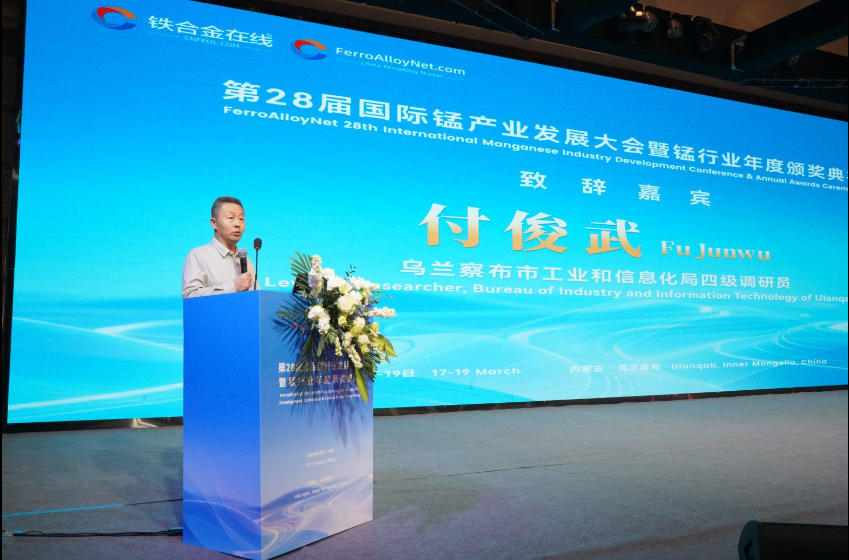
The conference officially opened at 9:00 AM. Following a concise yet solemn opening ceremony, Fu Junwu,Level IV Researcher, Bureau of Industry and Information Techenology of Ulanqab delivered keynote speeches, providing insightful analyses of the opportunities and challenges facing the global manganese industry and emphasizing the importance of strengthening supply chain collaboration and innovation in a complex and ever-changing international environment.
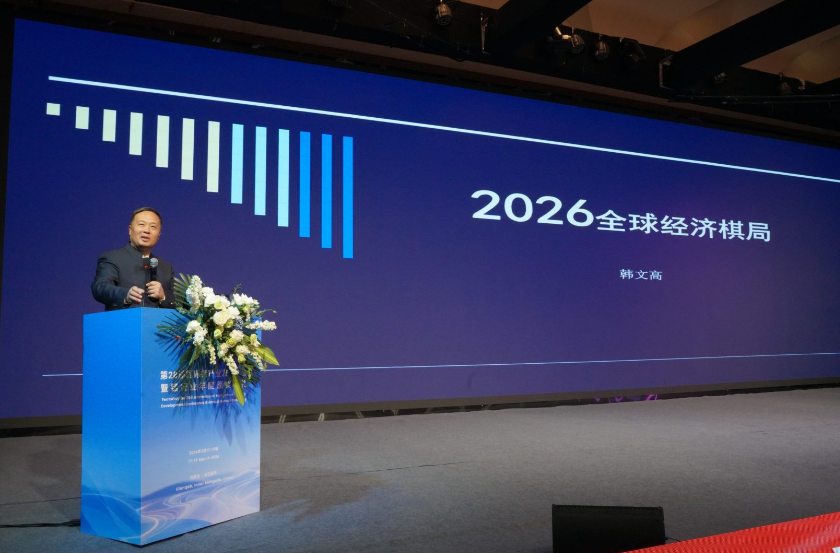
Han Wengao, Managing Director from Asia Fortune Forum, delivered the keynote speech on Global Economic Situation in 2026. He approached the topic from multiple dimensions, including global inflation trends, the shift in monetary policies of major economies, and geopolitical risks, outlining a panoramic view of the macroeconomic situation in 2026 for the participants and providing a high-level macroeconomic background support for industrial decision-making.
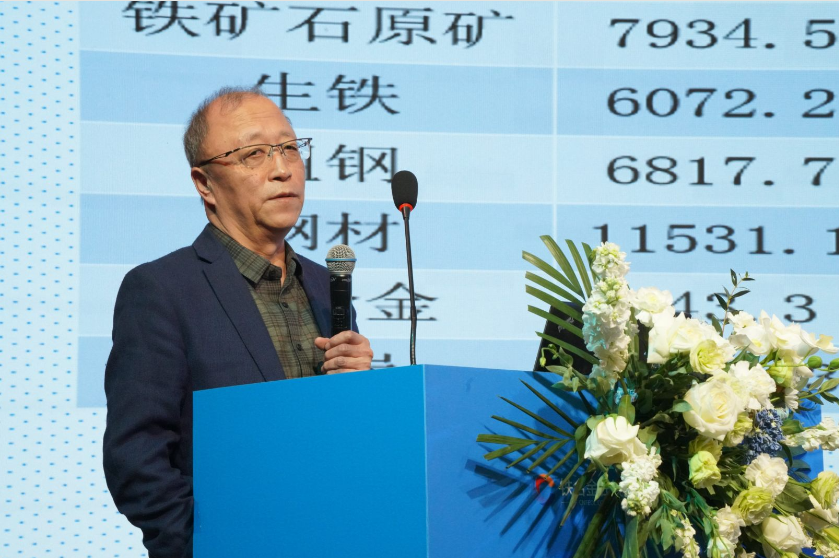
Shi Wanli, China Ferroalloys Industry Association, provided an in-depth interpretation of the Outlook for China's Ferroalloy Industry in 2026. He analyzed the policy environment and market opportunities facing the ferroalloy industry in the new year, taking into account domestic industrial policies, environmental constraints, and capacity control trends, offering authoritative guidance for enterprises' compliant operations and strategic planning.
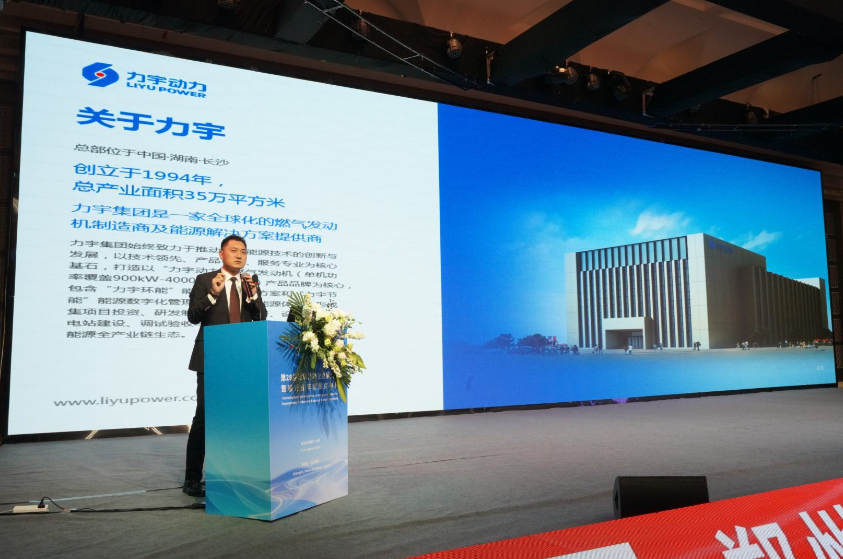
Li Guannan, General Manager of Marketing for China Mainland of Liyu Group, delivered an innovative presentation titled Alloy Exhaust Gas Renewal: A Two-Way Race Between the Alloy Industry and a Zero-Carbon Future. He focused on cutting-edge technologies for the resource utilization of alloy exhaust gases, demonstrating how industrial waste gas can be converted into clean energy, achieving a win-win situation for both economic and environmental benefits, and prompting attendees to think deeply about green smelting pathways.
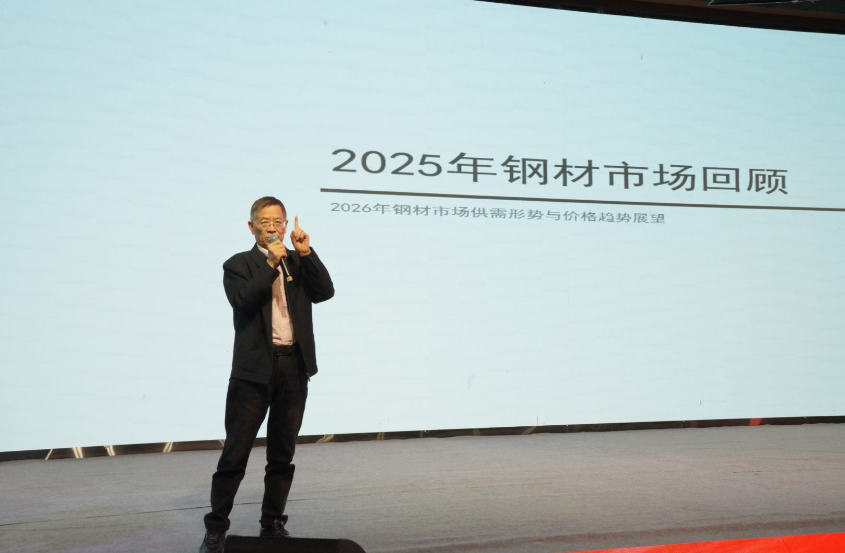
Zhang Bangxu, Managing Director from China Iron and Steel Associatio, delivered the closing speech of the morning session, presenting "Outlook on Steel Market Supply and Demand and Price Trends in 2026. As the largest consumer of manganese alloys, the steel market's performance directly impacts the manganese industry's prosperity. Zhang Bangxu provided accurate predictions for the 2026 steel market from the perspectives of changes in downstream demand structure and raw material cost support.
Lan Ming, Ulanqab Ferroalloy Industry Alliance, delivered a keynote speech entitled Industrial Opportunities and New Blueprint for Manganese Alloys in Ulanqab by 2026 in his capacity as host. He comprehensively introduced Ulanqab's unique advantages in green power supply, production capacity agglomeration, and logistics network, and extended a sincere invitation to global manganese industry colleagues to invest and develop businesses, demonstrating the responsibility and commitment of "half of the manganese industry".
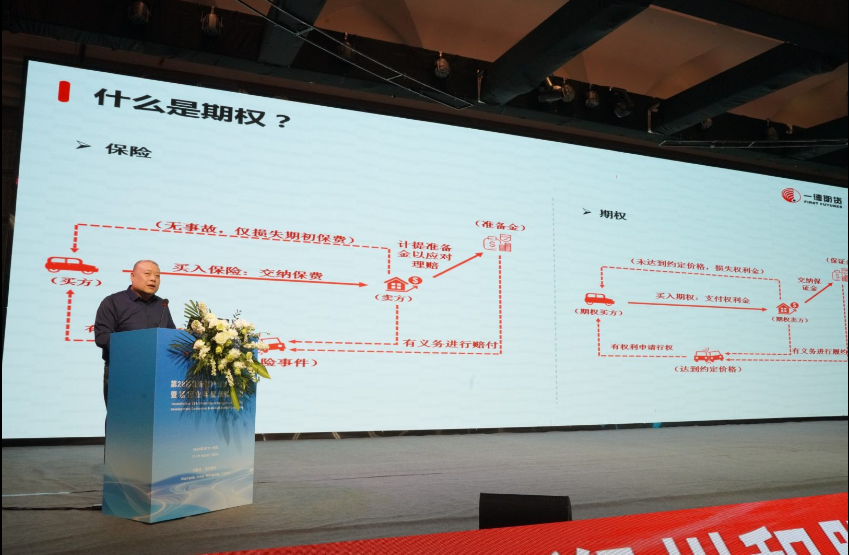
In his presentation, Analysis of Silicon Manganese Options Application and Operational Recommendations for 2026,Han Jie, Senior Analyst from Yide Futures Ferroalloy Division, systematically introduced the basic concepts of options, analyzed the behavior of option buyers and sellers, and introduced the profit and loss logic of buying/selling call/put options, as well as the key points for selecting in-the-money, at-the-money, and out-of-the-money contracts. He also mentioned the comprehensive synthesis strategy of spot, futures, and options, providing specific strategic guidance and operational ideas for the practical operation of silicon manganese options in 2026.
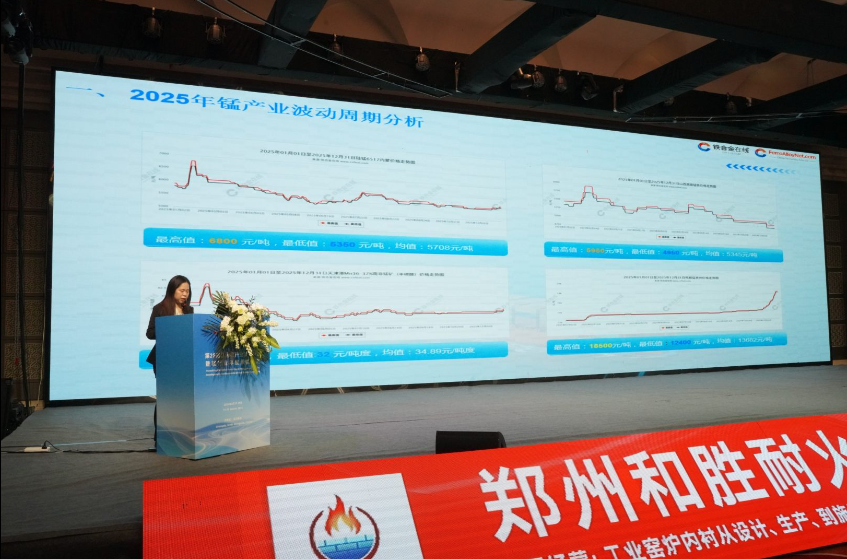
In her report, 2026 Manganese Series Market Supply and Demand Analysis and Outlook,Gan Xuemei, Manganese Analyst of FerroAlloyNet, stated that the manganese industry experienced significant fluctuations in 2025. In 2026, export tariffs on ferromanganese and ferromanganese will remain at 20%, while electrolytic manganese will be subject to zero tariffs but requires a license. South Africa and Gabon are planning to introduce restrictive policies, which could push up supply costs. On the supply and demand side, manganese ore imports are stabilizing, port inventories are at low to medium levels, and ferromanganese and ferromanganese production capacity reaches 35.56 million tons, with planned additions of over 4.05 million tons, maintaining a high supply level. Meanwhile, crude steel production is expected to decline slightly, limiting demand support. She believes that the industry's overcapacity and weak demand will remain unchanged in 2026. Companies need to promote green and low-carbon technological upgrades and strengthen industry self-regulation. Leading companies can consider establishing overseas mines to cope with challenges such as rising costs.
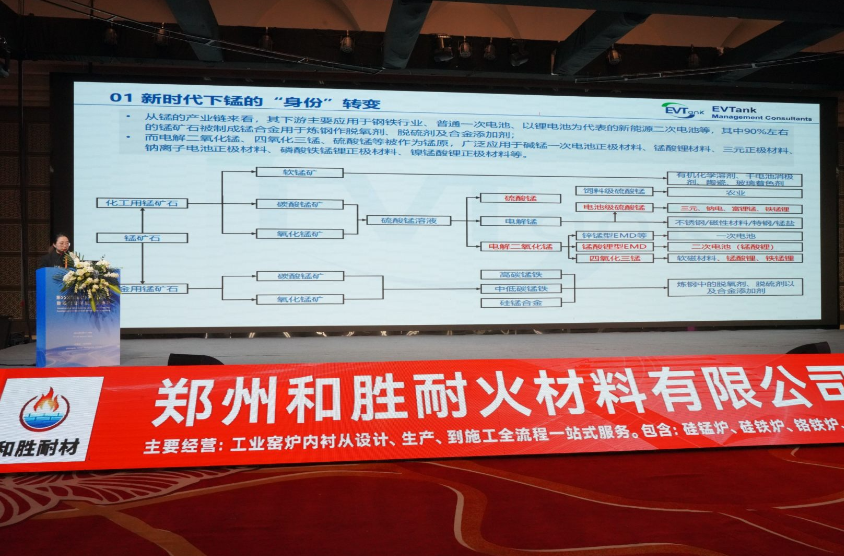
Liu Chang, Research Director from the Evian Economic Research Institute, delivered a keynote report entitled Development and Strategic Outlook of Manganese-based Materials Industry in the New Era. She noted that manganese's role in the new era is shifting from the "industrial cornerstone" of traditional metallurgy to the "energy core" of new energy batteries. The International Energy Agency predicts that by 2040, the demand for manganese in batteries will be eight times that of 2020. The rapid growth of the new energy industry is driving manganese demand. Ternary lithium batteries, lithium iron phosphate batteries, sodium batteries, lithium nickel manganese oxide batteries, and lithium-rich manganese-based batteries each have their own characteristics and application scenarios, with varying manganese content. In 2025, the global total manganese consumption for new energy lithium batteries is estimated at approximately 185,000 tons, and related companies are actively developing production capacity and technology for various manganese-based materials.
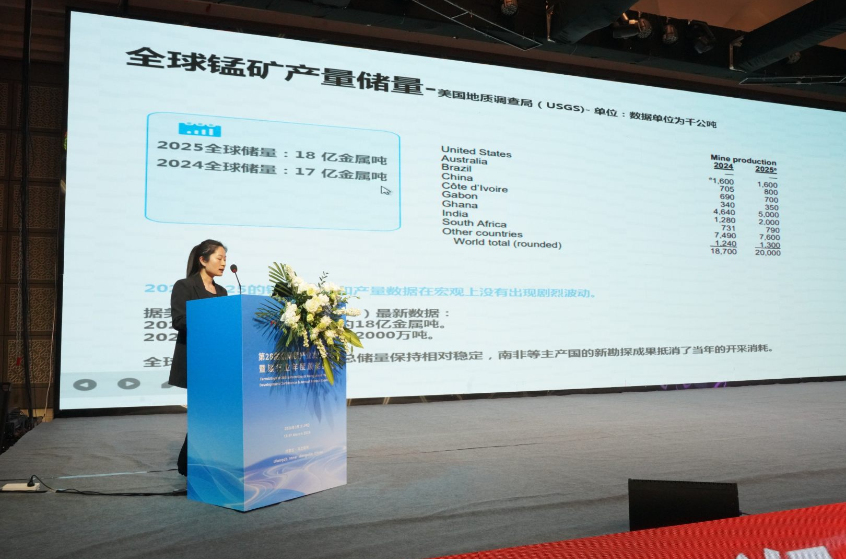
Dai Li, Manganese Analyst of FerroAlloyNet, analyzed the global manganese ore supply trend from the perspective of representative mines in her article titled Global Manganese Ore Supply Trends as Seen from Representative Mines. Global manganese ore reserves and production are expected to remain relatively stable in 2024-2025, with resources highly concentrated. South Africa, Gabon, and Australia contribute 71% of the supply, while Ukraine experiences supply disruptions, Brazil's supply weakens, and China and India rely on imports. China's top four import sources are South Africa, Ghana, Gabon, and Australia, with mines such as South32, Comilog, and Tshipi serving as pricing benchmarks. Logistics bottlenecks constrain production increases, and high-grade mines in Gabon and Australia face lifespan pressures, while South Africa remains the core of long-term supply. On the policy front, resource nationalism is rising in major African mining countries, with plans to restrict crude ore exports and promote local processing, which will drive up import costs in the long term. On the demand side, 90% of manganese ore is used in steel production. Global crude steel production is expected to decline slightly in 2025, with traditional markets experiencing a downturn, while the Middle East, Africa, India, and Vietnam are growth drivers. Future supply is expected to remain stable or increase slightly, with increased market concentration and a structural shift in the industry from raw ore exports to alloy and battery-grade material trade. Market participants are advised to monitor resource-rich countries' policies, invest in high-purity manganese materials, be wary of black swan events, and pay attention to emerging markets.
The FerroAlloyNet 28th International Manganese Industry Development Conference has now successfully concluded. This conference featured a clear theme and rich content, offering both a precise grasp of the macro situation and practical guidance for micro-level operations; it included in-depth analysis of traditional industries as well as a positive outlook on the new materials sector. Attendees expressed that the conference not only deepened their understanding of global manganese industry development trends but also uncovered new cooperation opportunities and forged a new consensus on development. We are very grateful for everyone's continued support and patronage of FerroAlloyNet. We look forward to seeing you all again! Thank you again!